Role
Product Designer
Tools/Skills
Figma, Figjam, Jira
Team
PM, Devs
Duration
6 months
BACKGROUND
Friction in development
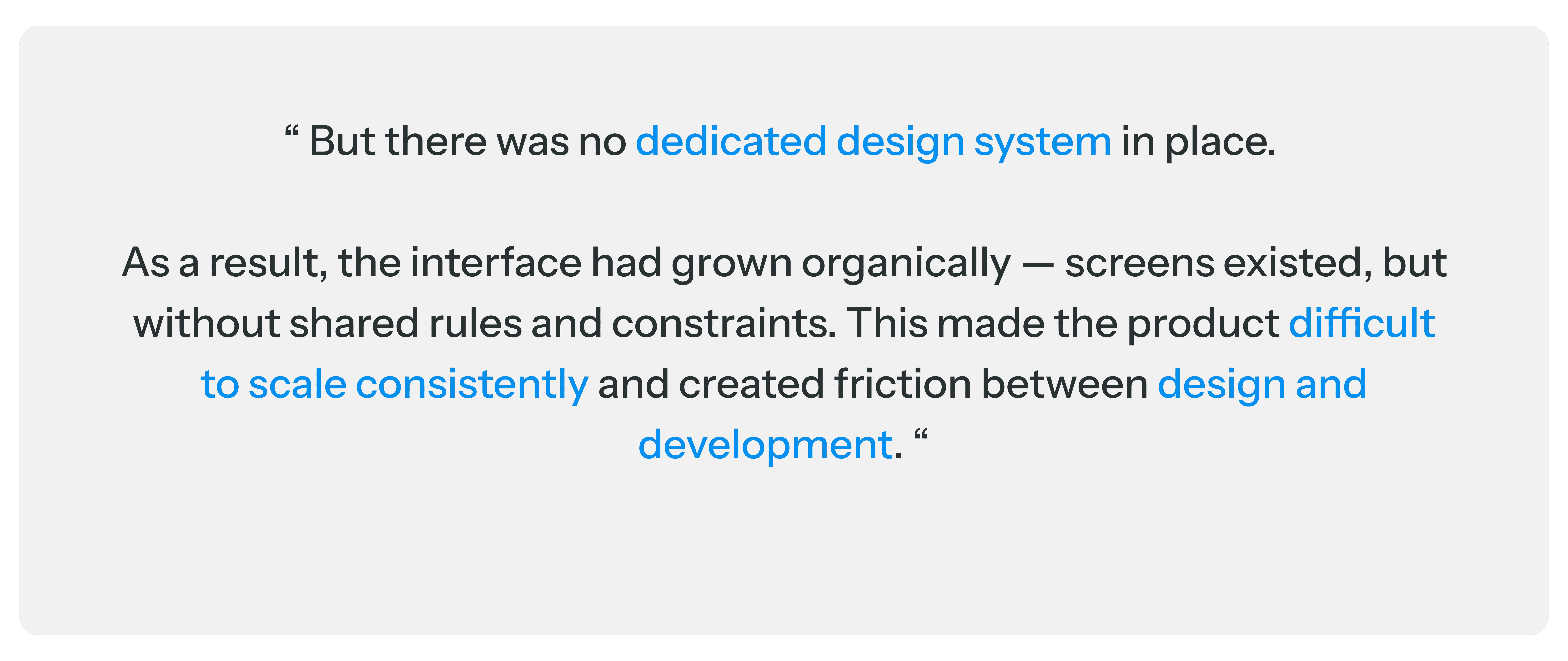
When I joined AstroLive, the product was already live and actively being developed. The team was developer-heavy, features were moving quickly, and design decisions were largely driven by immediate implementation needs.
PROBLEM SPACE
Absence of " What's Next "
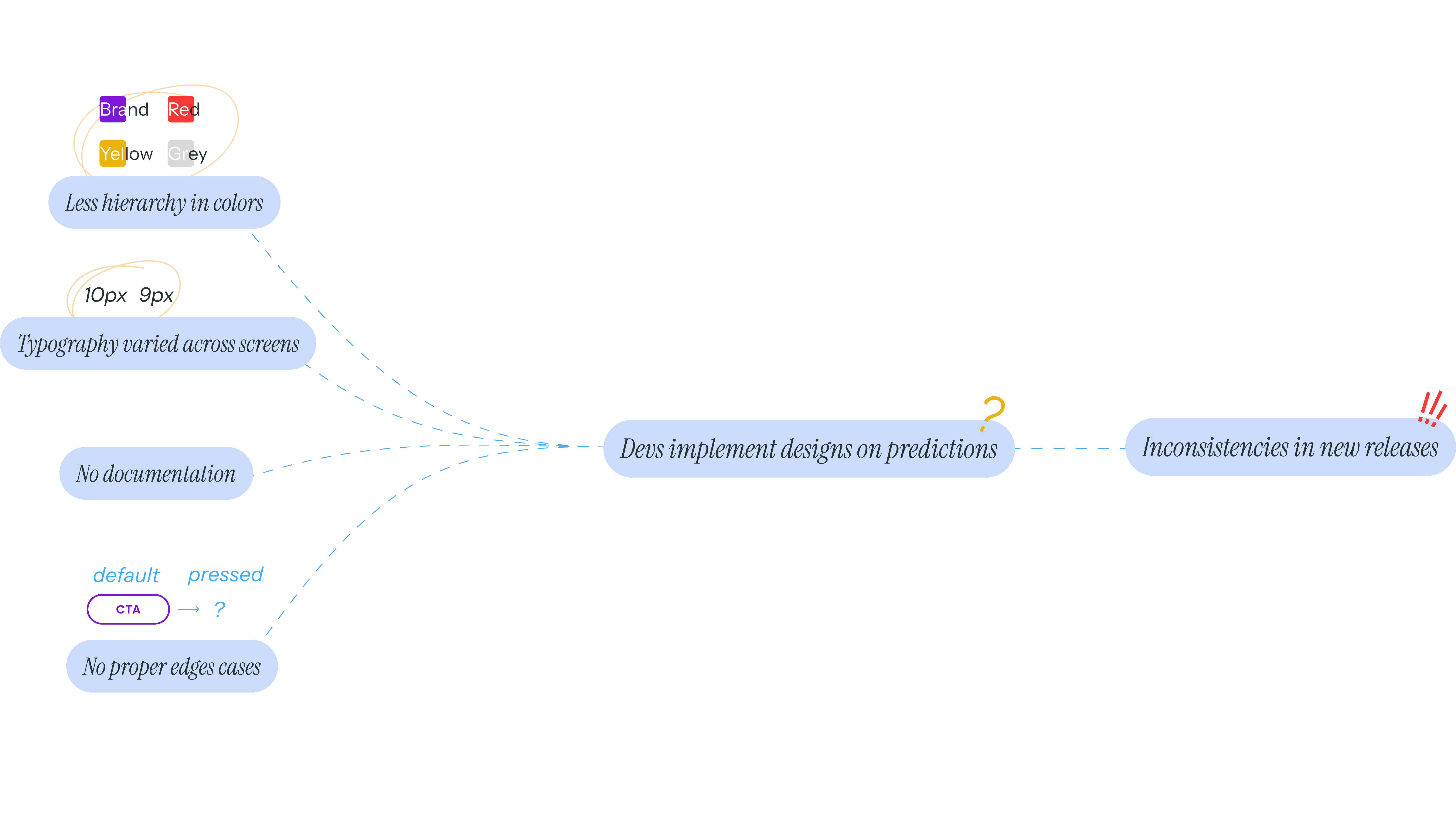
At the file level, there were no design tokens or variables. Colors were applied visually rather than systematically, spacing was inconsistent, and components were recreated multiple times with slight variations. This made it difficult for developers to implement designs predictably and increased the risk of inconsistencies with every new feature.
APPROACH
Establishing Structure
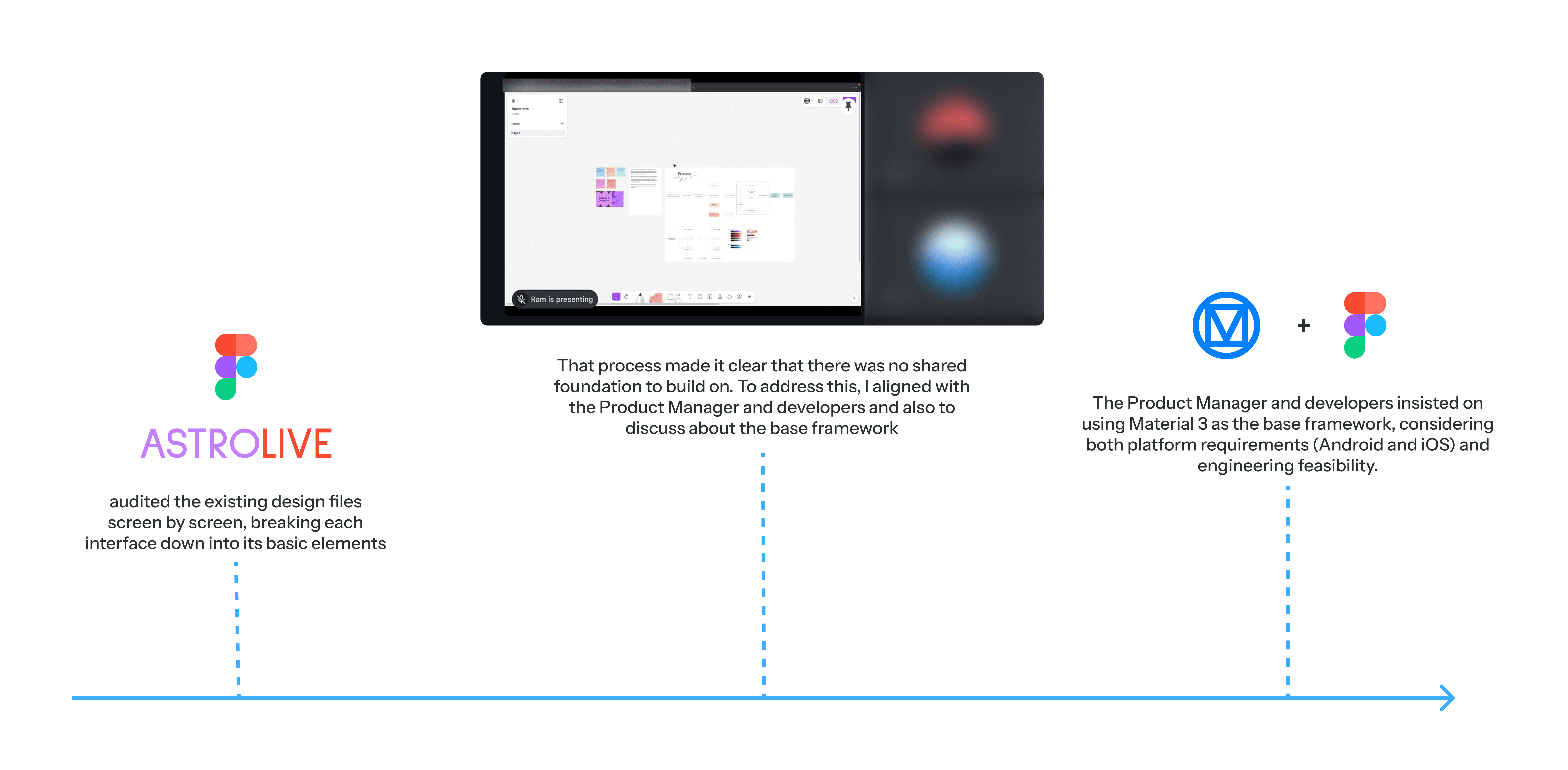
I spent almost two weeks going through the existing file, untangling clutter, understanding what worked and what didn’t, and gradually shaping a clear direction for how the design system should be organized moving forward.
SOLUTION
" transform="translate(0.437 0.437)" width="24.125878589977148px"/><path d="M 0 5.058 L 3.977 0 L 1.764 11.189" fill="transparent" height="11.1888111888112px" id="EMIfK5Kqt" stroke-dasharray="" stroke-linecap="butt" stroke-linejoin="miter" stroke-miterlimit="10" stroke-width="0.87" stroke="rgb(0, 143, 240)" transform="translate(10.489 6.381)" width="3.9772727272727195px"/></svg>)
Building the Design System
Throughout the implementation of the AstroLive design system, I closely studied the Material 3 Framework—reviewing them one by one and taking a deep dive into their structure—to apply the same principles as accurately and consistently as possible.
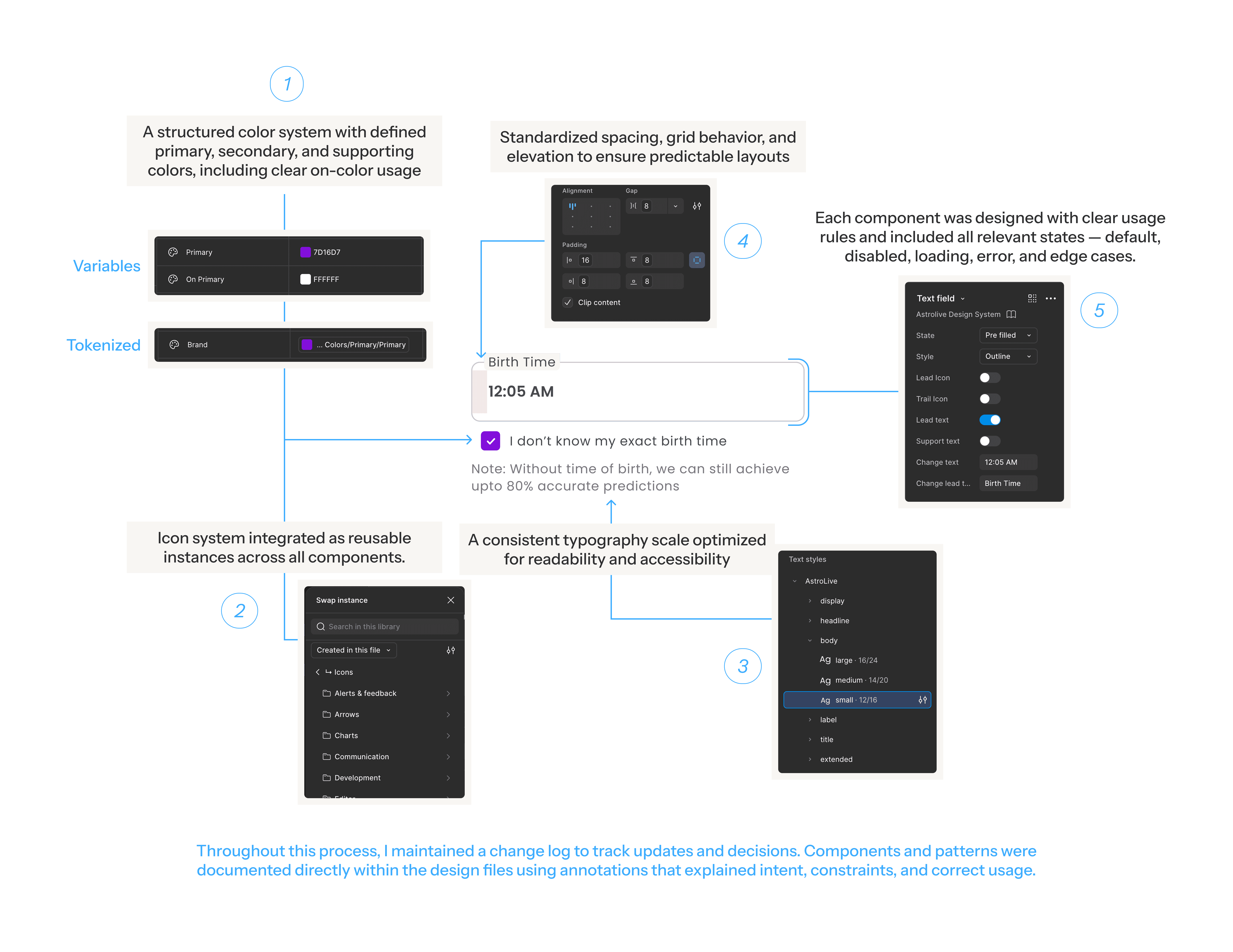
" transform="translate(0.437 0.437)" width="24.125878589977148px"/><path d="M 0.584 4.991 C 0.584 4.991 2.937 -1.426 5.653 0.292 C 8.946 2.375 0 11.189 0 11.189 L 6.225 11.189" fill="transparent" height="11.188808242994696px" id="DWGjHSV0w" stroke-dasharray="" stroke-linecap="butt" stroke-linejoin="miter" stroke-miterlimit="10" stroke-width="0.87" stroke="rgb(0, 143, 240)" transform="translate(9.309 6.425)" width="6.381131436825825px"/></svg>)
Collaboration and Handoff
I worked closely with developers and the Product Manager throughout the process. Design decisions were explained in walkthrough sessions, and detailed handoffs were supported through Jira tickets to ensure clarity during implementation.
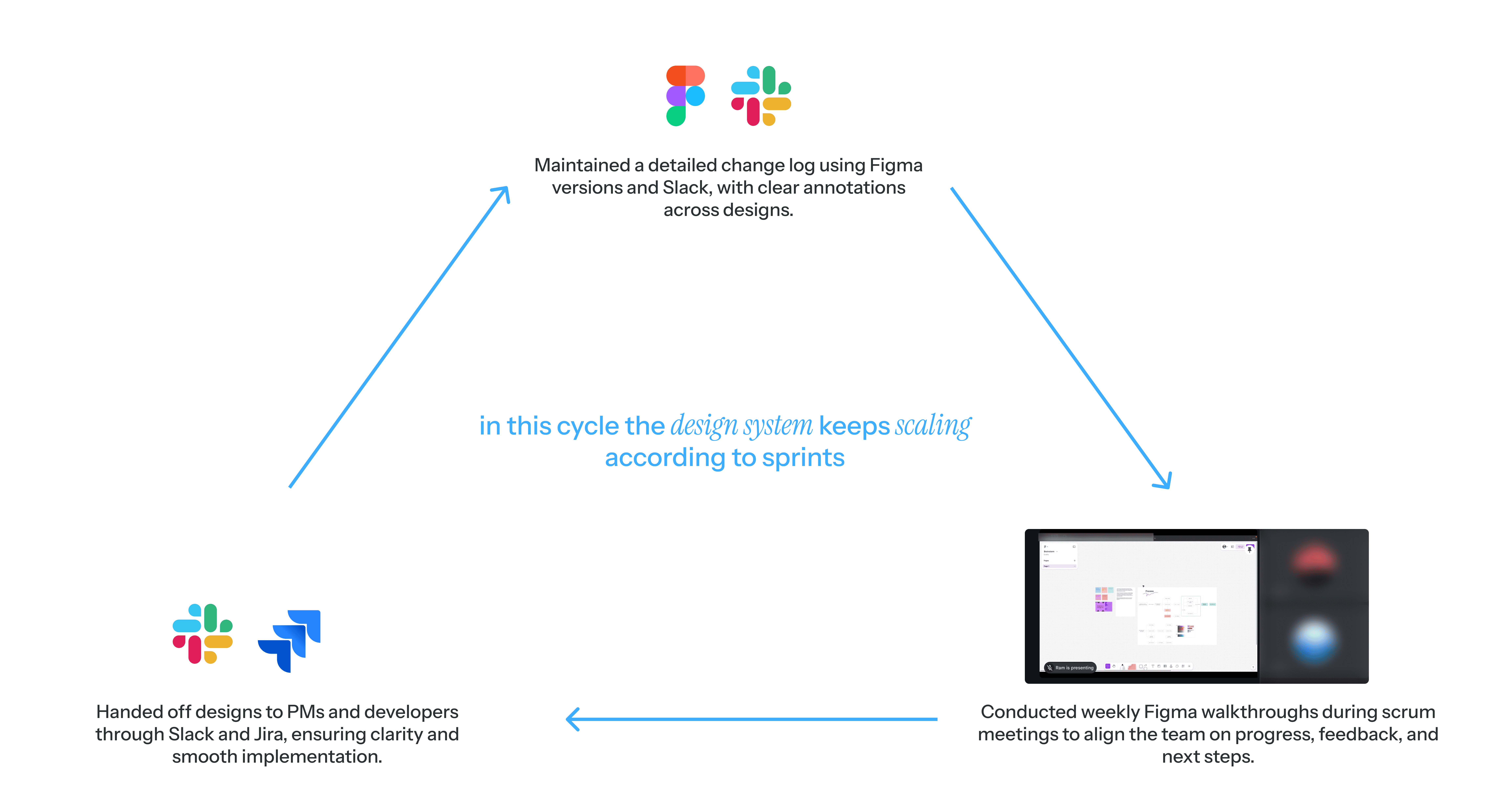
" transform="translate(0.437 0.437)" width="24.125878589977148px"/><path d="M 0.881 0 L 6.577 0 L 1.402 4.369 C 1.402 4.369 4.988 2.745 6.205 4.369 C 8.661 7.649 0 11.189 0 11.189" fill="transparent" height="11.1888111888112px" id="v1Lu0UxAF" stroke-dasharray="" stroke-linecap="butt" stroke-linejoin="miter" stroke-miterlimit="10" stroke-width="0.87" stroke="rgb(0, 143, 240)" transform="translate(9.178 6.906)" width="6.643343746807886px"/></svg>)
Outcome
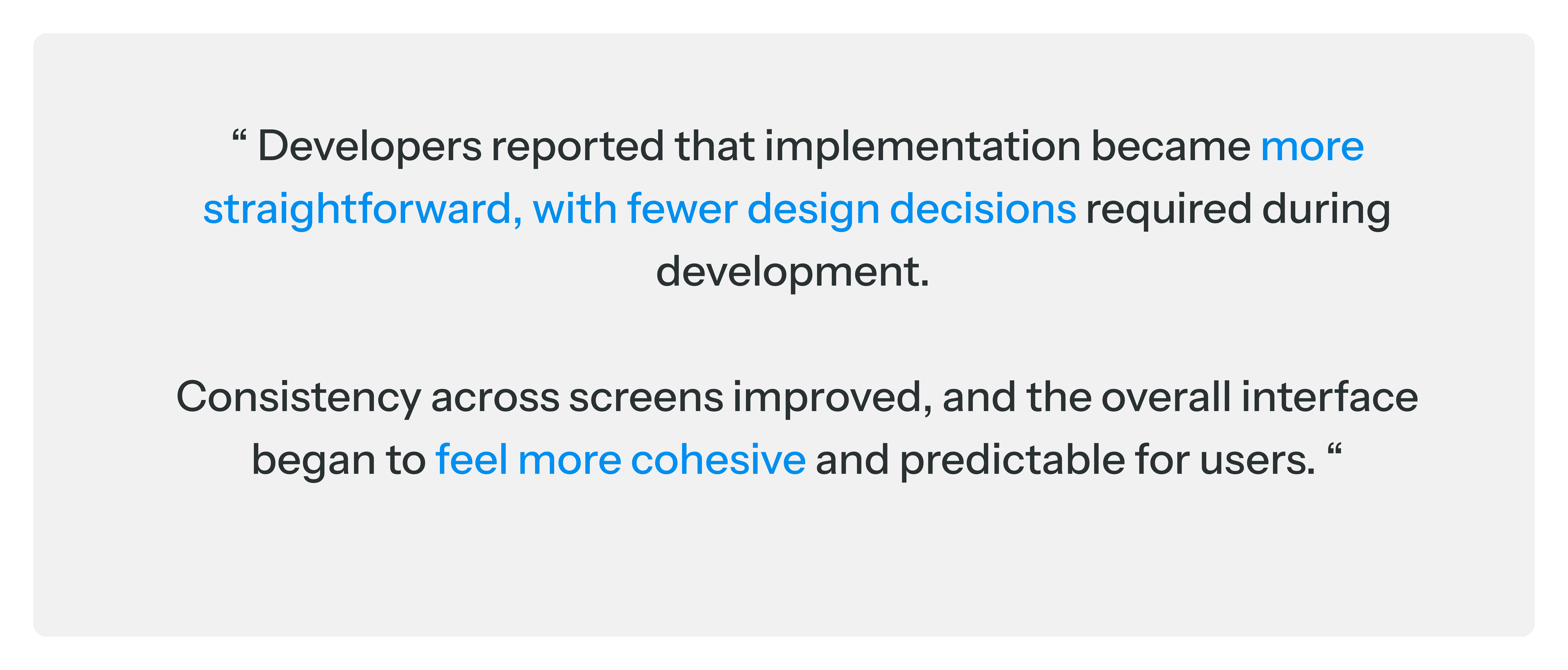
The design system was rolled out gradually across sprints rather than through a full relaunch. As new features were developed or existing ones updated, they adopted the system incrementally.
REFLECTION
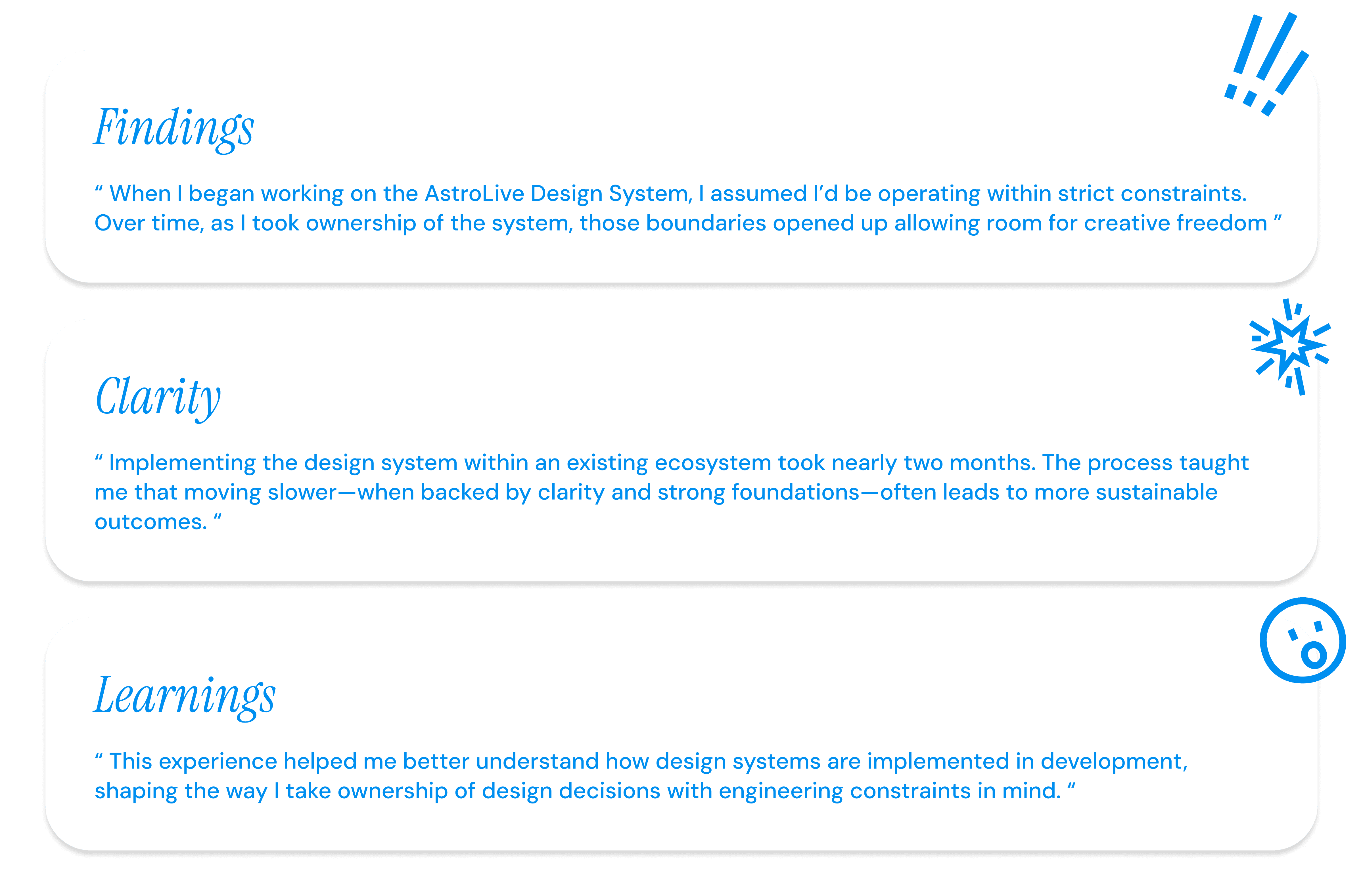
Key takeaways
My Full Experience
If you’re interested and wanna deep dive in learning more about what I worked on in more detail, you can access it here.